What Makes a Townhouse Development Feel Architectural?
Density does not need to mean repetition without identity. A few early design decisions can give a development clarity, value and a genuine point of difference.
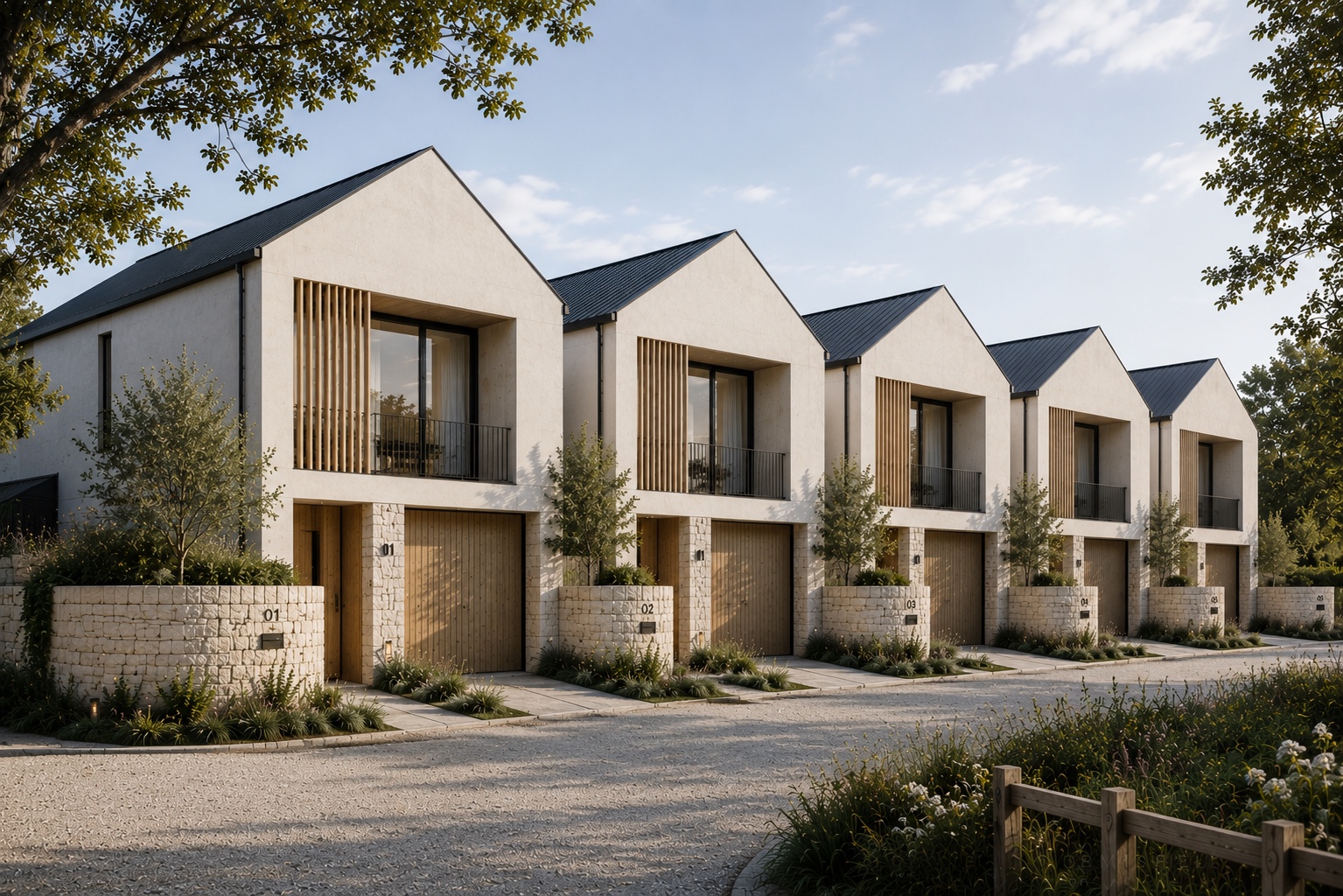
Begin with a strong organising idea
Successful developments usually have a clear underlying order. Building placement, entries, parking, private outdoor space and pedestrian movement should work together rather than being solved independently.
Repetition can be an asset
Repeated dwelling types can create construction efficiency and a strong visual rhythm. The key is to make the repeated element worth repeating: good proportions, useful plans and a material strategy that feels intentional.
Give the street elevation depth
Flat façades can quickly make attached housing feel generic. Recessed entries, balconies, screens, changes in plane and carefully controlled roof forms create shadow and depth without requiring unnecessary complexity.
Protect privacy
Outlook, window placement and outdoor living need to be considered across the whole development. Small shifts in orientation, screening and landscape can improve privacy while retaining daylight and a sense of openness.
Design for the buyer as well as the plan
A development needs to work commercially, but market appeal is not separate from architecture. A memorable arrival, generous natural light, practical storage and a coherent material palette can make homes feel more resolved and help a project stand apart from competing stock.