Designing Stables Around the Horse
Stable design should begin with the animal using the space — its physiology, senses, social behaviour and need for movement.
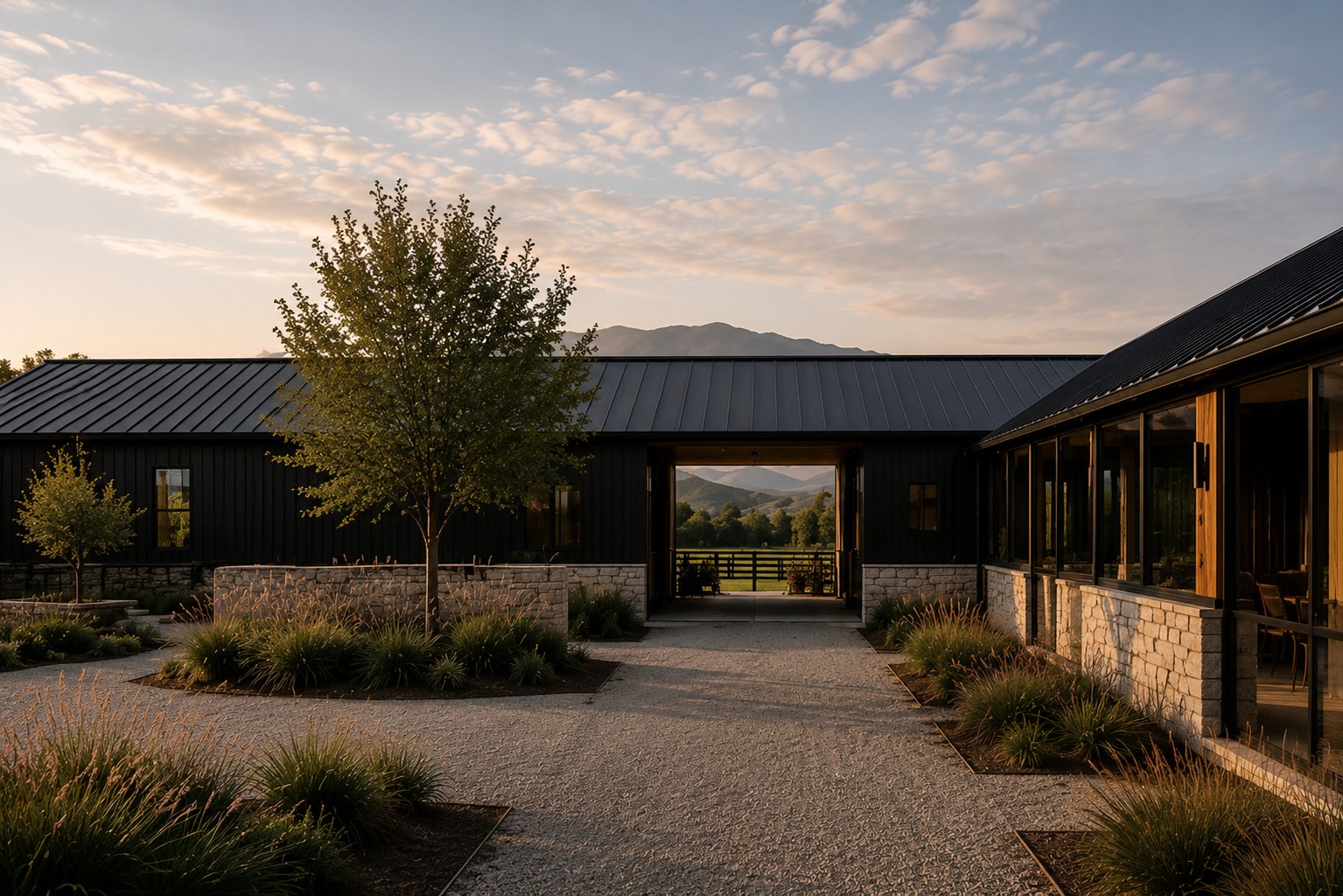
Design for a horse, not a human room
Traditional stable planning can become focused on human convenience and appearance. Our equestrian research instead begins with the horse: a social, mobile animal whose health and behaviour are influenced by the environment in which it is kept.
Airflow matters
Fresh air and effective ventilation are fundamental considerations in enclosed horse environments. Building volume, openings, stall fronts, partitions and roof form can all contribute to moving air through a stable while still providing appropriate shelter.
Support social connection
Visual and, where appropriate, tactile connection between horses can be designed into stall fronts and partitions. The aim is to support natural social behaviour without compromising safe handling or the practical operation of the stable.
Consider how horses perceive space
Horses experience buildings differently from people. Light transitions, contrast, sound, movement and visibility can influence how confidently a horse enters and moves through a space. Calm, legible circulation benefits both horse and handler.
Wellbeing and function should reinforce each other
A horse-centred stable does not need to be less refined. Ventilation, daylight, landscape connection, safe circulation and durable materials can become part of the architectural language, producing a facility that works beautifully because its function has been taken seriously.